
P203F fault code meaning and fix
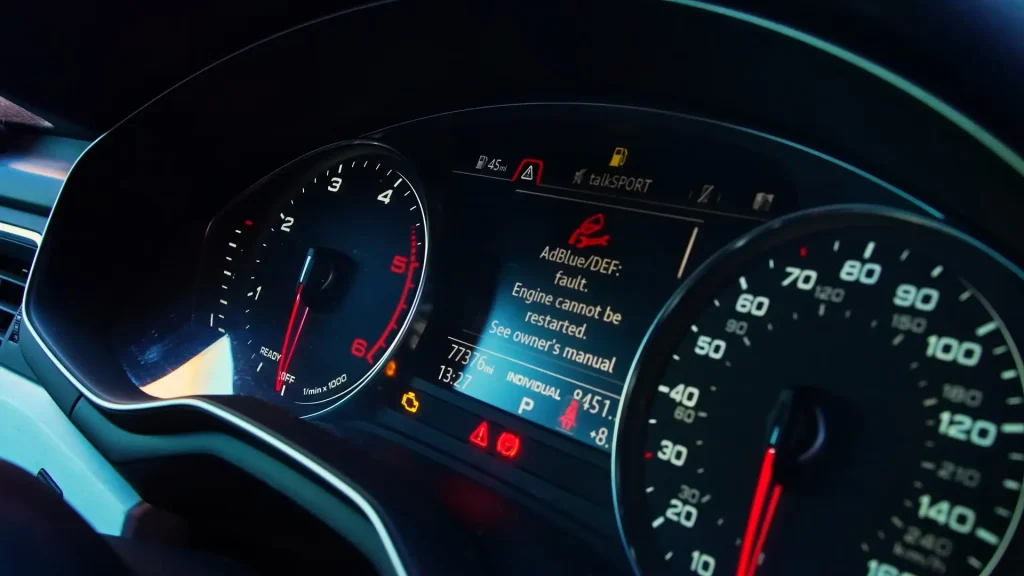
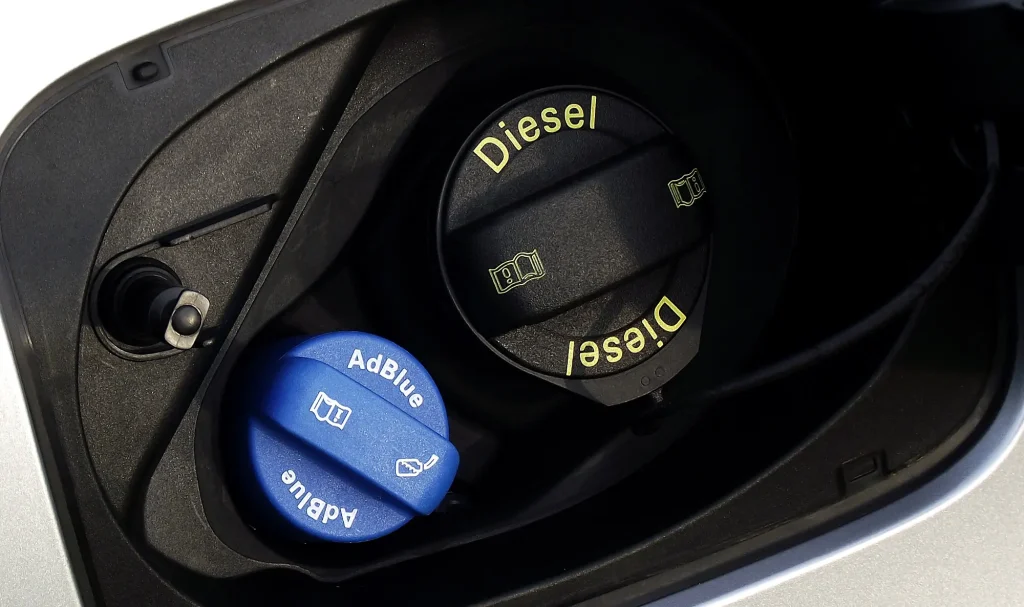
P203F means the engine computer thinks the AdBlue tank is too low. Top it up first, because that's often all it needs, and if the warning stays we can find out why where the vehicle is parked.

The short answer
The official description is Reductant level too low, and reductant is the generic name for AdBlue. The level sensor in the tank is reporting less fluid than the system needs to keep dosing.
Top up with fresh AdBlue as soon as you can. Leave it, and most Euro 6 vehicles start counting down to a point where the engine won't restart once it's switched off.
Symptoms that go with P203F
- An AdBlue warning or "top up AdBlue" message on the dash
- A no-restart countdown that gets lower with each trip
- The warning staying on after you've filled the tank
- A level gauge that jumps about or reads empty when you know it isn't
What causes P203F
| Cause | What you might notice | How it's confirmed |
|---|---|---|
| The tank really is low | Warning clears after a top-up | Top-up and a recheck |
| Faulty level sensor in the tank | Warning stays after filling, or the reading jumps | Level reading on live data against the actual fill |
| Frozen or crystallised AdBlue around the sensor | Warning on cold mornings that clears later | Temperature and heater checks |
| Leak from the tank or lines | Level dropping faster than normal, white crust underneath | Visual check and level history |
| Wiring fault at the tank sender | Readings that drop out | Circuit checks |
Reading P203F properly
P203F is a generic code and describes a low level reading on any make. Because the sensor's figure is what sets it, the code can't tell a genuinely low tank from a sensor that's wrong, which is why topping up comes first.
On some vehicles the warning takes a short while to clear after filling. If it hasn't gone after a couple of journeys, the freeze-frame data and the live level reading show whether the sensor is seeing the new fluid at all.
How P203F gets fixed
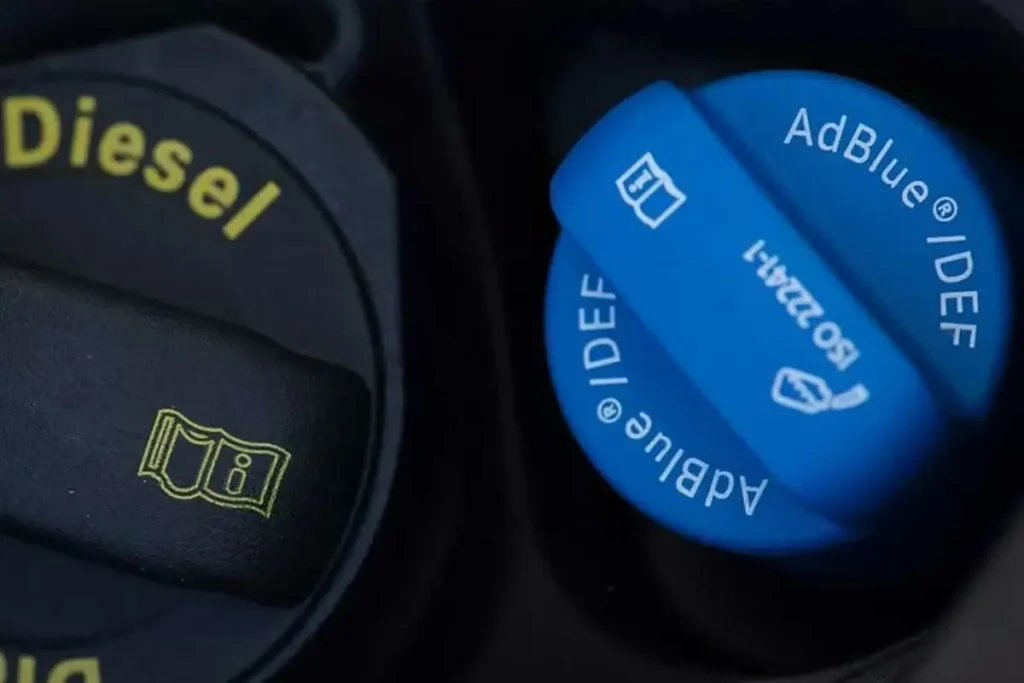
- Top up first. Fill with fresh AdBlue from a sealed container and use the vehicle normally.
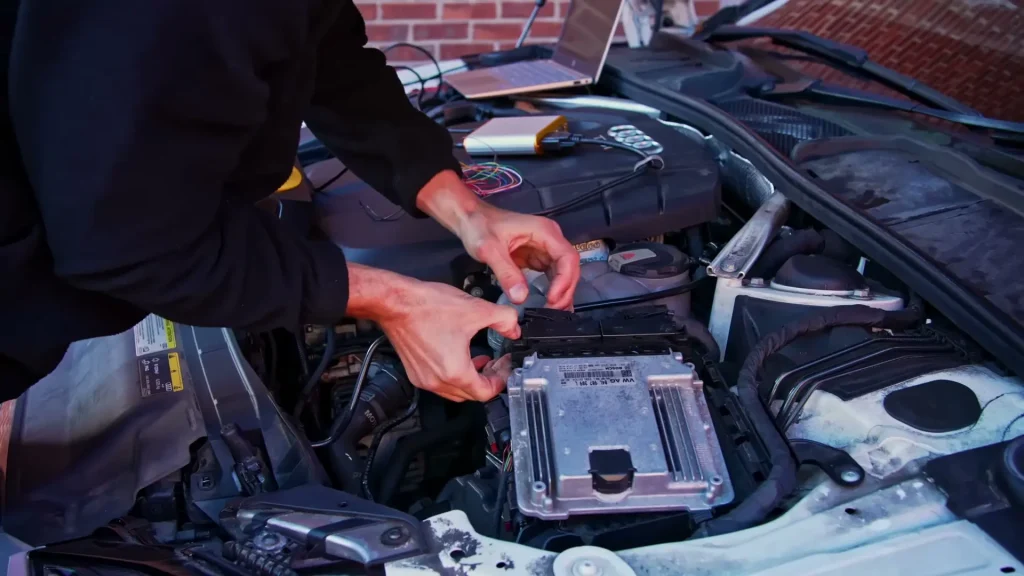
- Read the system if it stays. Level, temperature and heater readings come off the ECU, along with any countdown figure.
- Find the fault. A level sensor, a heater problem or a leak is pinned down, ready for a dealer or SCR specialist to repair.
- Recheck once the repair is done, so the level reading matches what's in the tank.
What we can do about P203F
Mobile diagnostics, £100 + VAT
If a top-up hasn't cleared it, we read the level sensor and AdBlue status where the vehicle is parked. We don't repair AdBlue systems, so you get a clear diagnosis to take to a dealer or SCR specialist.
AdBlue delete, £330 + VAT
A software delete removes AdBlue monitoring from the ECU, so a faulty level sensor stops triggering the warning.
What does P203F mean in plain English?
The car thinks it's running out of AdBlue. Most of the time it's right, and a top-up sorts it.
Is P203F a serious fault?
A low tank isn't, as long as you fill it. If the warning stays after filling, the countdown keeps running, and that can leave you with a vehicle that won't start.
Can I clear P203F with a cheap code reader?
You'd only hide it until the next level check. Topping up is what clears a genuine P203F, and a cheap reader won't fix a faulty sensor.
Does P203F mean the same thing on every make?
Yes. A Peugeot or Citroen showing P203F has the same low level reading as any other make, though level sensors and tanks differ from model to model.
How much does it cost to find the cause of P203F?
Topping up costs the price of a bottle of AdBlue. If that doesn't clear it, a mobile diagnostic is £100 + VAT. Related codes include P20B9 for the tank heater.
Can I use the AdBlue delete on a vehicle showing P203F that stays on the road?
No. The delete is sold for off-road and export vehicles only, and our guide Is AdBlue delete legal? explains the rules.
Get your P203F fault checked
Topped up and still got the warning? Send us the registration and the countdown figure, and we'll come out and read the tank sensor.
More fault codes explained
Eccles, Manchester M30 0SF