
Engine fault codes explained
A fault code points to the system the engine computer has flagged, and the cause behind it still needs finding. Look up your code below to see what it means and which system it belongs to.

How fault codes work
Each code starts with a letter for the area of the vehicle, and P stands for powertrain, which covers the engine, gearbox and emissions. Codes starting P0, and most starting P2, are generic and mean the same on any make, while P1 codes are set by the manufacturer.
Some scanners add two extra digits, such as P029900. Those last two characters are a sub-code with extra detail, so P029900 is the same fault as P0299.
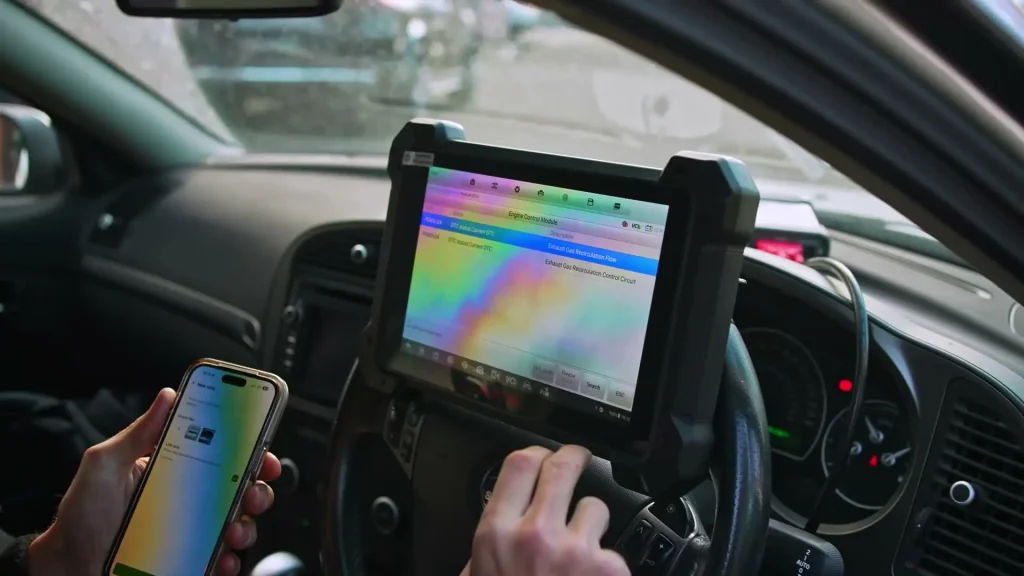
DPF fault codes
These codes cover soot and ash build-up, failed regenerations and the pressure sensor that measures how blocked the filter is.
| Code | Meaning |
|---|---|
| P2463 | Diesel particulate filter restriction, soot accumulation |
| P2002 | Diesel particulate filter efficiency below threshold (bank 1) |
| P242F | DPF restriction, ash accumulation |
| P246C | DPF restriction, forced limited power |
| P2452 | DPF pressure sensor A circuit |
| P2453 | DPF pressure sensor A circuit range/performance |
| P2454 | DPF pressure sensor A circuit low |
| P2455 | DPF pressure sensor A circuit high |
| P244A | DPF differential pressure too low (bank 1) |
| P244B | DPF differential pressure too high (bank 1) |
| P2458 | DPF regeneration duration |
| P2459 | DPF regeneration frequency |
| P2003 (covered on the P2002 page) | Diesel particulate filter efficiency below threshold (bank 2) |
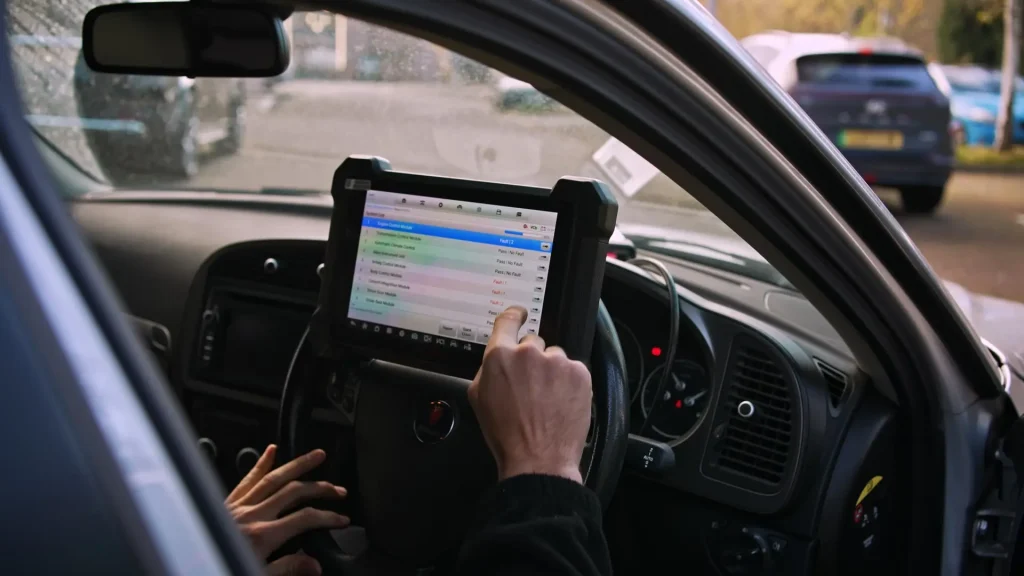
What to do when a code comes up
- Write down the full code, including any extra digits after the first five characters.
- Check the page for that code to see what it means and the usual causes.
- Book a diagnostic check if you want the cause confirmed before paying for a repair.
EGR fault codes
- P0401. Exhaust gas recirculation flow insufficient detected
- P0400. EGR flow malfunction
- P0402. EGR flow excessive detected
- P0403. EGR control circuit malfunction
- P0404. EGR control circuit range/performance
- P0405. EGR sensor A circuit low
- P0406. EGR sensor A circuit high
- P0489. EGR control circuit low
- P0490. EGR control circuit high
- P042E. EGR control stuck open
- P042F (covered on the P042E page). EGR control stuck closed
- P2457 (covered on the P0401 page). EGR cooling system performance
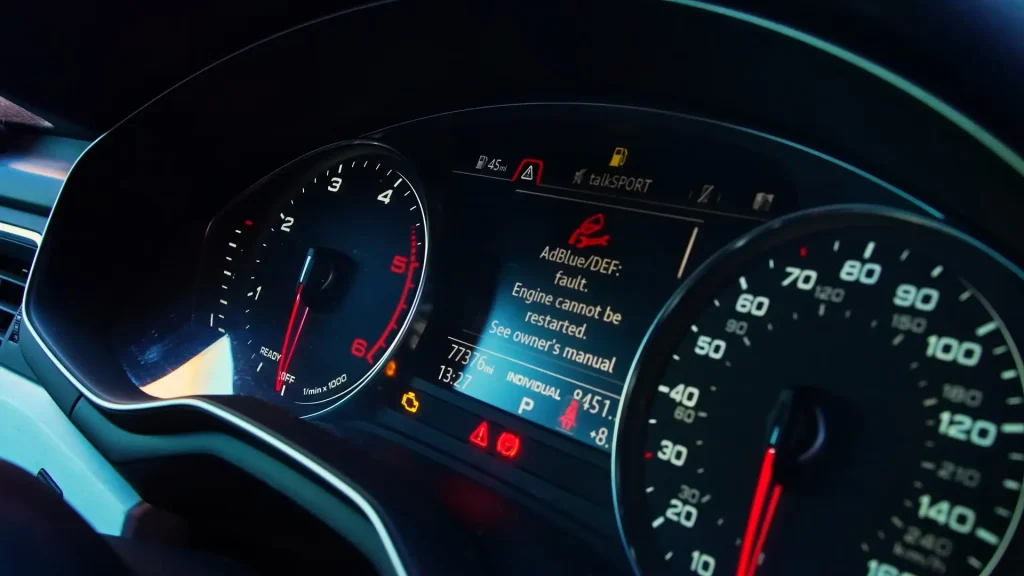
AdBlue and NOx fault codes
In fault code descriptions, "reductant" is the generic name for AdBlue. These codes cover the AdBlue tank, pump, heaters and injector, plus the NOx sensors that check the system is working.
| Code | Meaning |
|---|---|
| P20EE | SCR NOx catalyst efficiency below threshold (bank 1) |
| P20E8 | Reductant pressure too low |
| P203F | Reductant level too low |
| P204F | Reductant system performance (bank 1) |
| P207F (covered on the P204F page) | Reductant quality performance |
| P2047 | Reductant injector circuit/open (bank 1, unit 1) |
| P20B9 | Reductant heater A control circuit/open |
| P20BA (covered on the P20B9 page) | Reductant heater A control circuit performance |
| P2200 | NOx sensor circuit (bank 1) |
| P2201 | NOx sensor circuit range/performance (bank 1) |
| P2202 | NOx sensor circuit low (bank 1) |
| P229F | NOx sensor circuit range/performance (bank 1, sensor 2) |
| P2BAD | NOx exceedance, root cause unknown |
P20BD and P20C9 are covered on the P20B9 page, P208E on the P2047 page, and P2BA9, P2BAC and P2BAE on the P2BAD page.
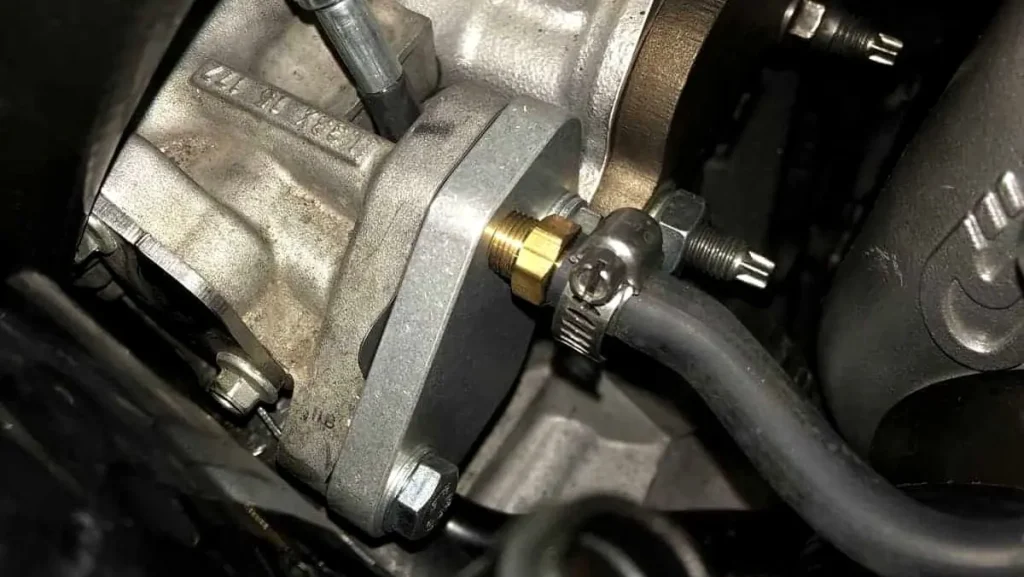
Turbo and boost fault codes
P0299 means turbocharger underboost, where the engine computer sees less boost pressure than it asked for. P0234 is the opposite, an overboost condition.
Split hoses, sticking turbo actuators and faulty boost sensors are common causes of both. A smoke test (£120 + VAT) is the quickest way to find a boost leak.
Sensor, fuel and glow plug codes
- P0087. Fuel rail or system pressure too low
- P0088. Fuel rail or system pressure too high
- P0101. Mass air flow sensor circuit range/performance
- P0380. Glow plug/heater circuit A
- P0670. Glow plug control module circuit
- P0544. Exhaust gas temperature sensor circuit (bank 1, sensor 1)
- P0546. Exhaust gas temperature sensor circuit high (bank 1, sensor 1)
- P0229. Throttle/pedal position sensor C circuit intermittent
Can I keep using the car with a fault code showing?
It depends on the code. A DPF or AdBlue code can lead to limp mode or a no-start countdown, so get it checked soon instead of waiting for it to get worse.
Will clearing the code fix the problem?
No. Clearing it only resets the warning, and the code returns as soon as the engine computer sees the same fault again.
Can you read fault codes at my home?
Yes. Our mobile diagnostic check is carried out wherever the vehicle is parked and costs £100 + VAT.
Will a delete clear an emissions fault code for good?
On a vehicle kept off-road or going for export, a DPF, EGR or AdBlue delete stops that system logging faults. Deletes aren't for road use, and our AdBlue delete guide explains the rules, which are the same for DPF and EGR.
Get your fault code checked
Book a mobile diagnostic and we'll read every stored code, find what's behind it and talk you through the repair.
Eccles, Manchester M30 0SF