
Blue smoke from exhaust and burning oil
Blue smoke from exhaust pipes is engine oil being burnt in the cylinders or the exhaust. When it appears tells you a lot about where the oil is getting in, from worn valve seals to leaking turbo seals.

The short answer
Blue or blue-grey smoke means oil is reaching somewhere it should be kept out of. A brief puff on start-up is often worn valve stem seals, while constant smoke points to worn piston rings or a leaking turbo.
Keep using the car only while the oil level stays topped up and the smoke is light. Stop if the oil warning light comes on, the smoke gets heavy or the engine note changes, because running low on oil can wreck an engine quickly.
How oil smoke looks
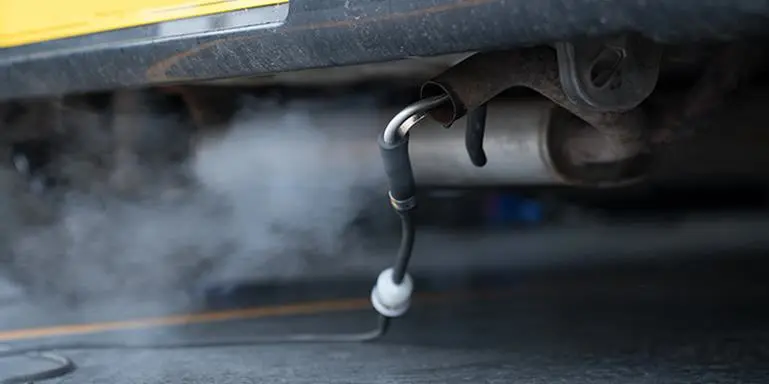
Oil smoke usually has a blue tint that's easiest to see in daylight, with a burnt oil smell. In poor light or from a diesel it can look grey, and mixed with condensation on a cold morning it can look blue-white.
If the smoke is pure white and smells sweet, coolant is more likely. Our white smoke guide covers that.
When it smokes and what that points to
| When you see it | Likely cause |
|---|---|
| A puff on start-up, then it clears | Worn valve stem seals letting oil seep down overnight |
| After lifting off the throttle, then accelerating again | Worn valve guides or seals |
| When accelerating or under load | Worn piston rings, or turbo seals leaking oil into the intake or exhaust |
| All the time, worse when warm | Worn piston rings or cylinder bores |
| Along with oil in the intercooler pipes | Turbo seals or high crankcase pressure |
Turbo oil leaks and blue smoke
The turbo spins on an oil-fed shaft, with seals keeping that oil out of the intake and exhaust. When those seals wear, or the oil can't drain back properly, oil gets pushed through with the air and burns.
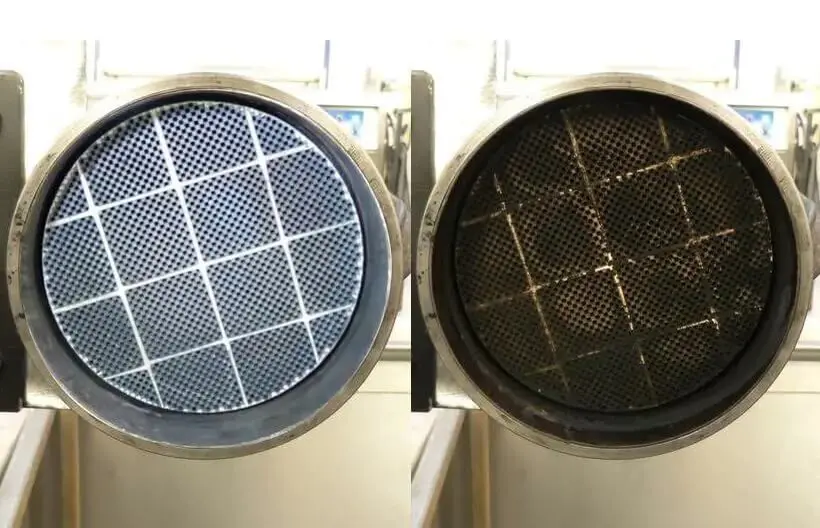
High crankcase pressure from a blocked breather, or high back pressure from a blocked DPF, can push oil past seals that are otherwise fine. We cover the turbo side in our turbo problems guide.
Other reasons for oil smoke
- An overfilled engine, where the crankshaft whips the oil into a mist
- A faulty crankcase breather or PCV valve pulling oil vapour into the intake
- Oil spilled on the exhaust during an oil change, which smokes from under the bonnet for a short while
- A failing vacuum pump or seal on some diesels, which can feed oil into the intake
Checks you can make
Check the oil level on a cold, level engine
Note the reading so you can track how fast it drops.
Note when the smoke appears
Start-up only, under load or all the time each point to different parts.
Look for oil outside the engine
Wet joints around the turbo or intercooler pipes help narrow it down.
Watch the DPF light on a diesel
Burning oil leaves ash that blocks the filter faster, see our blocked DPF guide.

Is blue smoke from the exhaust serious?
It means the engine is burning oil, which gets worse with time and can damage the catalytic converter or DPF. Light smoke isn't an emergency, but it needs checking.
Why is there grey smoke from my exhaust on start-up?
Short bursts of grey or blue smoke at start-up that then clear are usually valve stem seals. Oil seeps past them while the car stands and burns off when you start it.
What does white and blue smoke from the exhaust mean?
Usually oil smoke mixed with condensation on a cold engine. If it stays blue-white once warm, oil burning is the more likely cause.
How much oil burning is normal?
Most engines use a little oil between services, and each manufacturer sets its own acceptable limit. If you're topping up more often than you used to, something has changed.
Will blue smoke fail an MOT?
It can. Dense blue smoke is a fail on petrol cars, and oil smoke on a diesel pushes up the reading in the smoke opacity test.
Find out where the oil is going
We don't rebuild engines or replace turbos, but our mobile diagnostic (£100 + VAT) checks the codes, boost and DPF data to help trace the oil. You'll get a clear answer for your garage and a reading of how the DPF is coping.
Prefer email? Write to sales@sgrautomotive.co.uk
Eccles, Manchester M30 0SF