Smoke from exhaust and what the colour means
The colour of smoke from exhaust pipes is the quickest clue to what's going on inside the engine. White, blue and black smoke each point to a different kind of fault, and some smoke is perfectly normal.

The short answer
Smoke is the engine burning something it shouldn't, or burning fuel badly. White usually means water, coolant or unburnt diesel, blue or grey means oil, and black means too much fuel for the air available.
A wisp of vapour on a cold start is fine. Lots of smoke from the exhaust that doesn't clear, smells sweet or comes with a warning light or power loss means it's time to stop and get it checked.
Exhaust smoke colours at a glance
| Colour | What's burning | Common causes | Urgency | Full guide |
|---|---|---|---|---|
| Thin white, clears quickly | Water vapour | Condensation in a cold exhaust | Normal | White smoke |
| Thick white, sweet smell | Coolant | Head gasket, cracked head, EGR cooler leak | Stop and check | White smoke |
| White or grey, fuel smell | Unburnt diesel | Glow plugs, injectors, low compression | Check soon | White smoke |
| Blue or blue-grey | Engine oil | Valve stem seals, piston rings, turbo seals | Check soon | Blue or grey smoke |
| Black or dark grey | Excess fuel | Boost leak, dirty air filter, injectors, EGR | Check soon | Black smoke |
What counts as normal exhaust smoke
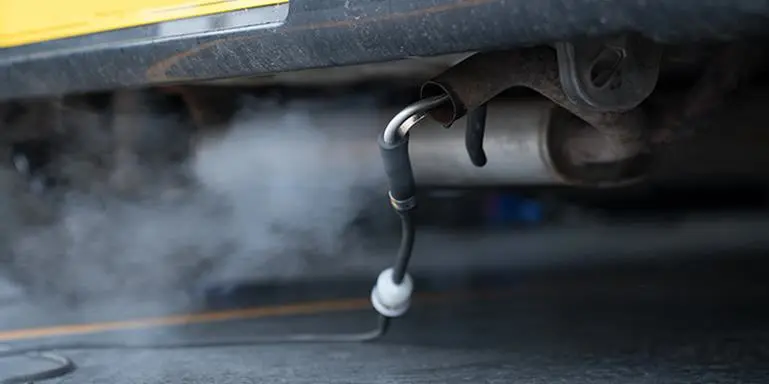
A modern car in good health should show almost nothing from the tailpipe once warm. On cold or damp days you'll see steam for the first few minutes, and you may notice drips of water from the exhaust, which is the same condensation.
Diesels with a working DPF should be close to invisible at all times. Older diesels without a filter can puff a little dark smoke under hard acceleration, but anything more than a brief puff is worth investigating.
When the smoke appears matters
The moment smoke shows up narrows the cause down as much as the colour does.
- Only on start-up. Condensation, or oil seeping past valve stem seals overnight if it's blue
- When accelerating. Over-fuelling, a boost leak or turbo seals letting oil through
- At idle once warm. Coolant getting into the cylinders, or a worn engine
- After lifting off the throttle. Often oil drawn past worn valve guides
- All the time. A more serious fault that needs checking straight away
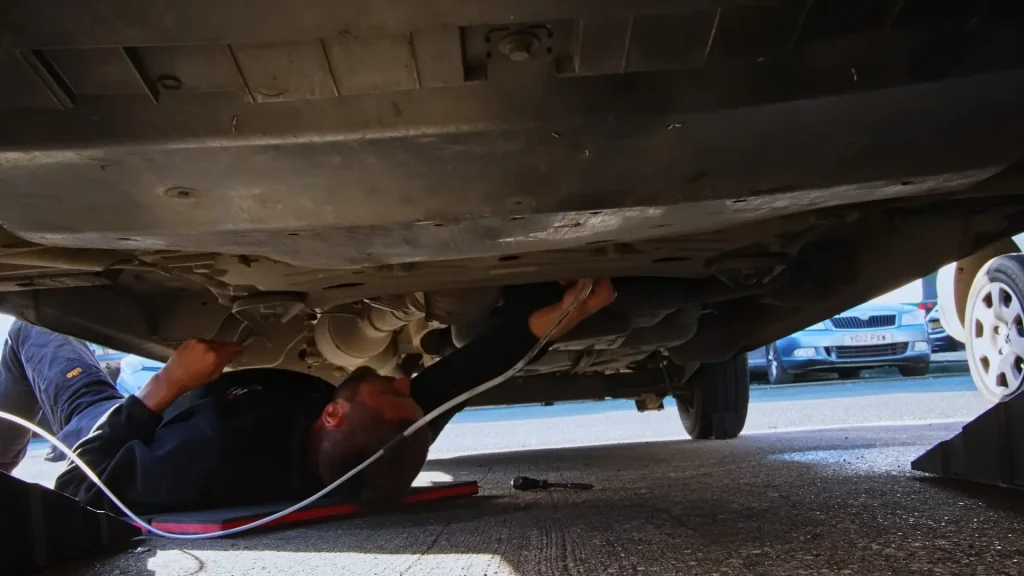
Smoke from a diesel with a DPF
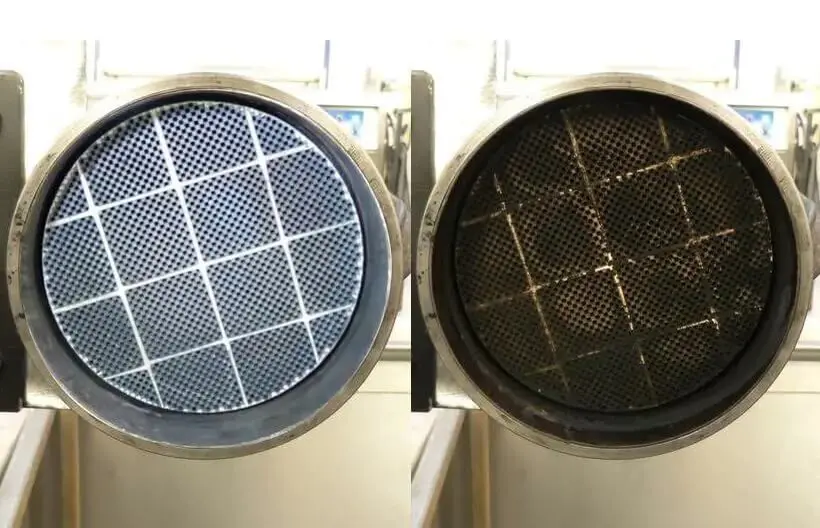
A diesel particulate filter traps soot before it reaches the tailpipe, so visible black smoke from a DPF-equipped diesel suggests the filter is cracked or missing. At the MOT, any visible smoke from a vehicle that should have a DPF is treated as a major fault.
Oil and coolant smoke also damage a DPF, because the ash they leave behind can't be burnt off by regeneration. Fixing the cause early protects the filter. Read more in our blocked DPF guide.
Other clues worth noting
Colour gets you most of the way. These details help confirm what the smoke is telling you.
Smell
Sweet means coolant, burnt oil means oil, and a sharp raw-fuel smell means diesel or petrol isn't burning properly.
Fluid levels
Coolant or oil that keeps dropping with no puddle under the car is usually going out through the exhaust.
Warning lights
An engine management, glow plug or DPF light alongside the smoke narrows the fault down quickly.
How the engine runs
Rough idling, misfires or lost power with the smoke suggest the cause is affecting combustion.
Why is there smoke coming from my exhaust on start-up?
On a cold day it's usually condensation that clears within minutes. Blue smoke on start-up that then fades often points to worn valve stem seals.
Is a lot of smoke from the exhaust dangerous?
Heavy smoke usually means the engine is burning fuel, oil or coolant in large amounts. Stop using the car if it's thick, sweet-smelling or paired with overheating or power loss.
Can a smoky exhaust fail an MOT?
Yes. Diesels go through a smoke opacity test, and petrol cars fail if they give off dense blue or clearly visible black smoke at idle.
What colour smoke means a head gasket?
Thick white smoke with a sweet smell and a falling coolant level is the classic sign. It isn't proof on its own, so get it checked before agreeing to a big repair.
Not sure what your smoke is telling you?
We can read the codes and check live fuelling, boost and temperature data at your home or workplace for £100 + VAT. It's a quick way to find out whether the smoke points to a cheap fix or a bigger job.
Eccles, Manchester M30 0SF